
Buy tear plates from JAERA
At JAERA, you will find tear plates made from the highest quality materials, including stainless steel tear plates in grades 1.4301 and 1.4404 of the popular Mandorla tear plate grade. Convince yourself of our high quality standards and benefit from the fast processing of product inquiries and short delivery times.
Do you want to buy tear plates? Put your trust in JAERA, your experienced sheet metal specialist with more than 40 years of expertise!
Overview
Three steps to your tear sheets
01
01 Find product
Find product with the filter function.02
02 Shopping cart
Add product Cart03
03 Inquiry
Fill in the inquiry form. We will process your request within a few minutes.
Tear plate product filter
Material
Thickness [mm]
Dimension [mm]
Shows all 9 results
| Material | Stainless steel 1.4301 |
|---|---|
| Thickness | 3 |
| Wide | 1000 |
| Length | 2000 |
| Embossing type | Mandorla |
| Weight | 5,3 |
| Dimension | 1000 x 2000 |
| Material | Stainless steel 1.4301 |
|---|---|
| Thickness | 3 |
| Wide | 1250 |
| Length | 2500 |
| Embossing type | Mandorla |
| Weight | 8,6 |
| Dimension | 1250 x 2500 |
| Material | Stainless steel 1.4301 |
|---|---|
| Thickness | 4 |
| Wide | 1000 |
| Length | 2000 |
| Embossing type | Mandorla |
| Weight | 70 |
| Dimension | 1000 x 2000 |
| Material | Stainless steel 1.4301 |
|---|---|
| Thickness | 4 |
| Wide | 1500 |
| Length | 3000 |
| Embossing type | Mandorla |
| Weight | 16,8 |
| Dimension | 1500 x 3000 |
| Material | Stainless steel 1.4301 |
|---|---|
| Thickness | 5 |
| Wide | 1000 |
| Length | 2000 |
| Embossing type | Mandorla |
| Weight | 88 |
| Dimension | 1000 x 2000 |
| Material | Stainless steel 1.4301 |
|---|---|
| Thickness | 5 |
| Wide | 1250 |
| Length | 2500 |
| Embossing type | Mandorla |
| Weight | 140 |
| Dimension | 1250 x 2500 |
| Material | Stainless steel 1.4301 |
|---|---|
| Thickness | 5 |
| Wide | 1500 |
| Length | 3000 |
| Embossing type | Mandorla |
| Weight | 190 |
| Dimension | 1500 x 3000 |
| Material | Stainless steel 1.4404 |
|---|---|
| Thickness | 3 |
| Wide | 1000 |
| Length | 2000 |
| Embossing type | Mandorla |
| Weight | 5,3 |
| Dimension | 1000 x 2000 |
| Material | Stainless steel 1.4404 |
|---|---|
| Thickness | 4 |
| Wide | 1000 |
| Length | 2000 |
| Embossing type | Mandorla |
| Weight | 7,3 |
| Dimension | 1000 x 2000 |
Why should you buy tear plates from JAERA?
JAERA is your specialist for tear plates. We have been supplying high-quality sheets for industry since 1982. Your advantages:
- Experience from over 40 years of sheet metal trading
- High customer satisfaction
- Fast processing of your requests
- Highest quality standards
- Delivery service with short delivery times, NEXTDAY delivery possible
- No minimum purchase
- Comprehensive service and individual customer advice
- Further processing service & fabrications as requested
Tear plates – dimensions and material thicknesses
At JAERA, we attach great importance to variety and quality in order to meet your requirements. Our product range of weeper plates includes various dimensions and material thicknesses for numerous areas of application. Whether you are looking for weeper plates for robust floor coverings, non-slip work areas or decorative elements, you will find the right product specification for your project.
You can find our range of different tear plates in the product overview or in our product catalog.
Below you will find detailed information on the available dimensions of our tear plates:
Dimensions:
- 1,000 x 2,000 mm
- 1,250 x 2,500 mm
- 1,500 x 3,000 mm
Thickness:
- 3.0 mm + tear
- 4.0 mm + tear
- 5.0 mm + tear
Tear plates - Product overview
| Material | Dimensions | Thickness | Weight kg/piece |
|---|---|---|---|
|
Stainless steel 1.4301 |
1,000 x 2,000 mm |
3 mm |
53 |
|
Stainless steel 1.4301 |
1,000 x 2,000 mm |
4 mm |
70 |
|
Stainless steel 1.4301 |
1,000 x 2,000 mm |
5 mm |
88 |
|
Stainless steel 1.4301 |
1,000 x 2,000 mm |
6 mm |
110 |
|
Stainless steel 1.4404
|
1,000 x 2,000 mm |
3 mm |
53 |
|
Stainless steel 1.4404
|
1,000 x 2,000 mm |
4 mm |
73 |
|
Stainless steel 1.4404
|
1,000 x 2,000 mm |
5 mm |
88 |
|
Stainless steel 1.4301
|
1,250 x 2,500 mm |
3 mm |
86 |
|
Stainless steel 1.4301
|
1,250 x 2,500 mm |
4 mm |
114 |
|
Stainless steel 1.4301
|
1,250 x 2,500 mm |
5 mm |
140 |
|
Stainless steel 1.4404
|
1,250 x 2,500 mm |
5 mm |
138 |
|
Stainless steel 1.4301
|
1,500 x 3,000 mm |
4 mm |
168 |
|
Stainless steel 1.4301
|
1,500 x 3,000 mm |
5 mm |
190 |
Mandorla" tear plate
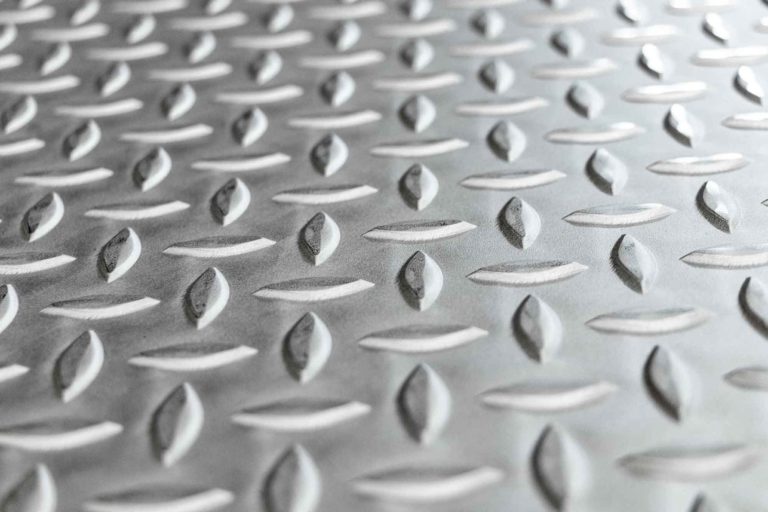
At JAERA, we have high-quality mandorla plates made of stainless steel for you. Mandorla tra ys are one of the most commonly used types of weeping tray. They are known for their specific pattern, which is reminiscent of the shape of almonds.
This type of checker plate has a regular arrangement of individual almond-shaped bumps that are distributed diagonally offset to each other over the entire surface. Mandorl sheets offer good slip resistance and good rolling properties and are often used as a base for work platforms or loading ramps.
JAERA further processing service
Do you have individual wishes for your tear plates? We are happy to implement these in our further processing service.
You are welcome to enquire about which further processing options can be implemented for your product. Please use our contact form or make your request by telephone.
Tear plates - all information
Here you will find all the important information about tear plates. If you have any questions about your order or questions about individual products, please contact us using the contact form.
What are tear plates?
Tear plates are metal plates made of stainless steel, steel or aluminum that are given an anti-slip surface with a tear pattern using a special rolling process. This pattern consists of protruding oval, tapered metal ribs that are offset from each other and resemble tears in shape. In addition to their excellent slip resistance, tear plates are also characterized by their attractive appearance.
This surface structure results in a high degree of slip resistance, as liquids can run off easily and no puddles form. The tear structure also prevents people or objects from slipping on the sheet. Tear plates offer very good grip when work shoes are worn, as slipping movements at the contact points between the shoe profile and the individual tears are prevented by increased friction.
The slip resistance of tear plates is specified in slip resistance classes, which must be legally fulfilled depending on the area of application. DIN 51130 and BGR 181 (ZH1/571) are common slip resistance standards for floors in work areas where there is a risk of slipping.
The surface texture of tear plates not only ensures particularly good slip resistance, but also contributes to increased stability and durability. Thanks to their robust properties, tear plates are a perfect choice for stair treads, work platforms, non-slip floor mats, ramps and many other applications where safety plays a crucial role.
This surface structure results in a high degree of slip resistance, as liquids can run off easily and no puddles form. The tear structure also prevents people or objects from slipping on the sheet. Tear plates offer very good grip when work shoes are worn, as slipping movements at the contact points between the shoe profile and the individual tears are prevented by increased friction.
The slip resistance of tear plates is specified in slip resistance classes, which must be legally fulfilled depending on the area of application. DIN 51130 and BGR 181 (ZH1/571) are common slip resistance standards for floors in work areas where there is a risk of slipping.
The surface texture of tear plates not only ensures particularly good slip resistance, but also contributes to increased stability and durability. Thanks to their robust properties, tear plates are a perfect choice for stair treads, work platforms, non-slip floor mats, ramps and many other applications where safety plays a crucial role.
Tear plates - areas of application
Due to their non-slip and robust structure, tear plates are indispensable in a wide range of areas and industries. Here is an overview of the many possible applications:
Industry:
Transportation and vehicle construction:
Construction and architecture:
Food industry:
Industry:
- Non-slip floor coverings in production facilities and workshops
- Platforms and landings in industrial plants
- Protective covers for machines and systems
- Loading ramps in industry, warehouse logistics or manufacturing
Transportation and vehicle construction:
- Floor coverings in commercial vehicles, trailers and truck bodies
- Footplates and boarding areas for buses and trains
- Protective cladding and robust components in shipbuilding and aviation
Construction and architecture:
- Stairs and walkways in public and commercial buildings
- Façade elements and decorative accents in modern architecture
- Safety barriers and railings at height
Food industry:
- Non-slip work areas in commercial kitchens, breweries and food processing plants
- Hygienic and easy-to-clean floor coverings in cold stores and storage areas
What are the advantages of tear plates?
Tear plates offer a number of advantages that make them an excellent choice for various applications.
Do you want to buy tear plate? See the advantages for yourself:
- Slip resistance: The characteristic tear pattern offers excellent slip resistance(slip resistance class R11), which significantly increases safety in work areas, on stairs and platforms.
- High stability: Tear-drop sheets have impressive stability, which makes them extremely resilient even in high-traffic and heavily used areas.
- Resistance: Tear plates are extremely resistant to wear, corrosion and weathering, which is why they are particularly durable.
- Corrosion resistance: Tear plate is highly resistant to corrosion and can even be used in adverse weather conditions. This makes it ideal for outdoor applications.
- Good rolling behavior: The closed structure enables good rolling behavior of wheels with high slip resistance at the same time.
- Aesthetics: Tear plates are also popular as a design element due to their surface structure.
- Versatility: Available in various materials such as stainless steel, aluminum and steel, tear plates can be used in almost any environment.
What materials are liner trays made of?
Tear plate is mainly made from steel, stainless steel and aluminum. Depending on the intended use, it can then be further processed by hot-dip galvanizing, for example.
- Stainless steel tear plate: Due to their excellent corrosion resistance, stainless steel tear plates are ideal for use in damp environments, such as in the food industry or near the coast. Commonly used alloys for tear plate are stainless steel 1.4301 and stainless steel 1.4404.
- Tear plate steel: Steel, often kept bright, is characterized above all by its high strength and is about 1/3 cheaper than stainless steel. For this reason, steel sheets are often used in applications where stability and load-bearing capacity are paramount. For additional protection against corrosion, steel tear plates can be hot-dip galvanized.
- Galvanized tear plate: A distinction is made here between pre-galvanized for indoor use and subsequently hot-dip galvanized for outdoor use.
- Aluminum tear plate: Aluminum, often used as pure aluminum (AL 99.5), is considered corrosion-resistant, easy to form and lightweight. It also has good temperature resistance. Aluminum tear plates are particularly suitable for applications where lightness and corrosion resistance are important.
How is tear plate manufactured?
The production of tear plates begins with metal plates, usually made of steel, stainless steel or aluminum. The tears are created by applying high force through a process known as forming rolling. In this process, a roller embosses the tear pattern into the sheet at very high pressure.
The elevations in the sheet metal are therefore not added later, but are created during the manufacturing process from a single piece of sheet metal. This ensures that tear plates made of stainless steel or other materials are particularly stable.
What is the difference between tear plate, Chequer plates and checker plate?
The term checker plate can be used synonymously with checker plate and Chequer plates , whereby checker plate is more of a generic term that refers to the ribbed surface texture of these sheets. The other two terms are derived from the shape of the protrusions.
Tear plates are sheets with individual oval protrusions that are arranged diagonally to each other and are mainly made of steel or stainless steel. A very common type of louvered plate is the mandorla plate, whereby mandorla is derived from the almond shape of the individual ribs.
Warp plates, in turn, are usually made of aluminium and are characterized by several elongated, pointed protrusions, the so-called warts, arranged parallel to each other. Each row is followed by the next row at a constant distance, offset by 90 degrees. Common types of sheet metal are the duett or quintet sheet metal, whereby the name refers to the number of parallel lugs. The quintet plate therefore has five parallel lugs.
The difference between Chequer plates and tear plate is therefore the different shape and the materials from which the plate is made. Although there is a distinction between these types of sheet metal, they are often used interchangeably.
Tear plate - slip resistance classes
Slip resistance classes for tear plate are an important measure to determine the degree of slip resistance, which is determined by the Material, the pattern and the surface treatment of the plate. They indicate the resistance to slipping, measured by the angle of inclination up to which a person can stand safely on the surface without slipping. Classification is usually carried out in accordance with DIN 51130, which divides the sheets into different slip resistance classes depending on their area of application and the degree of slip hazard.
Tabular overview of slip resistance classes:
Slip resistance class | Tilt angle | Field of application |
R9 | 6-10° | Low risk of slipping, e.g. in private living areas |
R10 | 10-19° | Moderate risk of slipping, e.g. in offices, warehouses |
R11 | 19-27° | Increased risk of slipping, e.g. outdoors, in workshops or commercial kitchens |
R12 | 27-35° | High risk of slipping, e.g. in industrial production areas |
R13 | >35° | Very high risk of slipping, e.g. floor coverings in slaughterhouses |

Sonic
2024-01-12
Schnelle Lieferung und Material top.

Marc Culas
2023-11-28
Sehr kompetente Beratung - hier wird auf die individuellen Bedürfnisse wirklich eingegangen. Danke & weiter so!

Vicky Moschny
2023-11-13
Absolut Empfehlenswert! Freundliches und kompetentes Personal. Gute Qualität, hervoragender Service und Preis-Leistungsverhältnis. Pünktliche Lieferungen. Vielen Dank und herzliche Grüße an JAERA!

Oscar Casares Solera
2023-11-02
Diese Firma ist einfach herausragend! Ihre Produkte/Dienstleistungen haben meine Erwartungen übertroffen, und die Qualität ist wirklich bemerkenswert. Der Kundenservice ist stets freundlich und äußerst hilfsbereit. Ich kann diese Firma uneingeschränkt empfehlen und werde mit Sicherheit weiterhin ihre Leistungen in Anspruch nehmen. Fünf Sterne sind definitiv verdient!

Andrea S
2023-11-01
Super kompetente Beratung, schnelle Lieferung und erstklassige Qualität. Das Alles zu fairen Preisen.
Jederzeit wieder und sehr zu empfehlen.

Thomas Schäfer
2023-10-31
Haben für unseren Balkon ein Lochblech benötigt, haben gute Beratung und passendes Blech schnell erhalten, empfehlenswert.

Nicolas Holle
2023-10-30
Für meinen Brennstoffhandel (www.holle-premium-holzbrennstoffe.de) habe ich zum Lagerbau von Pellets und Holzbriketts Lochbleche und Gitter benötigt.Der Service, die Lieferung und der Kontakt war hervorragend. Immer wieder gerne. Diese Firma ist zu empfehlen und meine erste Anlaufadresse wenn ich wieder Bleche benötige.

Mariusz Kantor
2023-10-30
Freundlicher Kontakt und Lösungsorientiertes arbeiten.
Google Overall rating 5.0 out of 5 based on 51 reviews
